

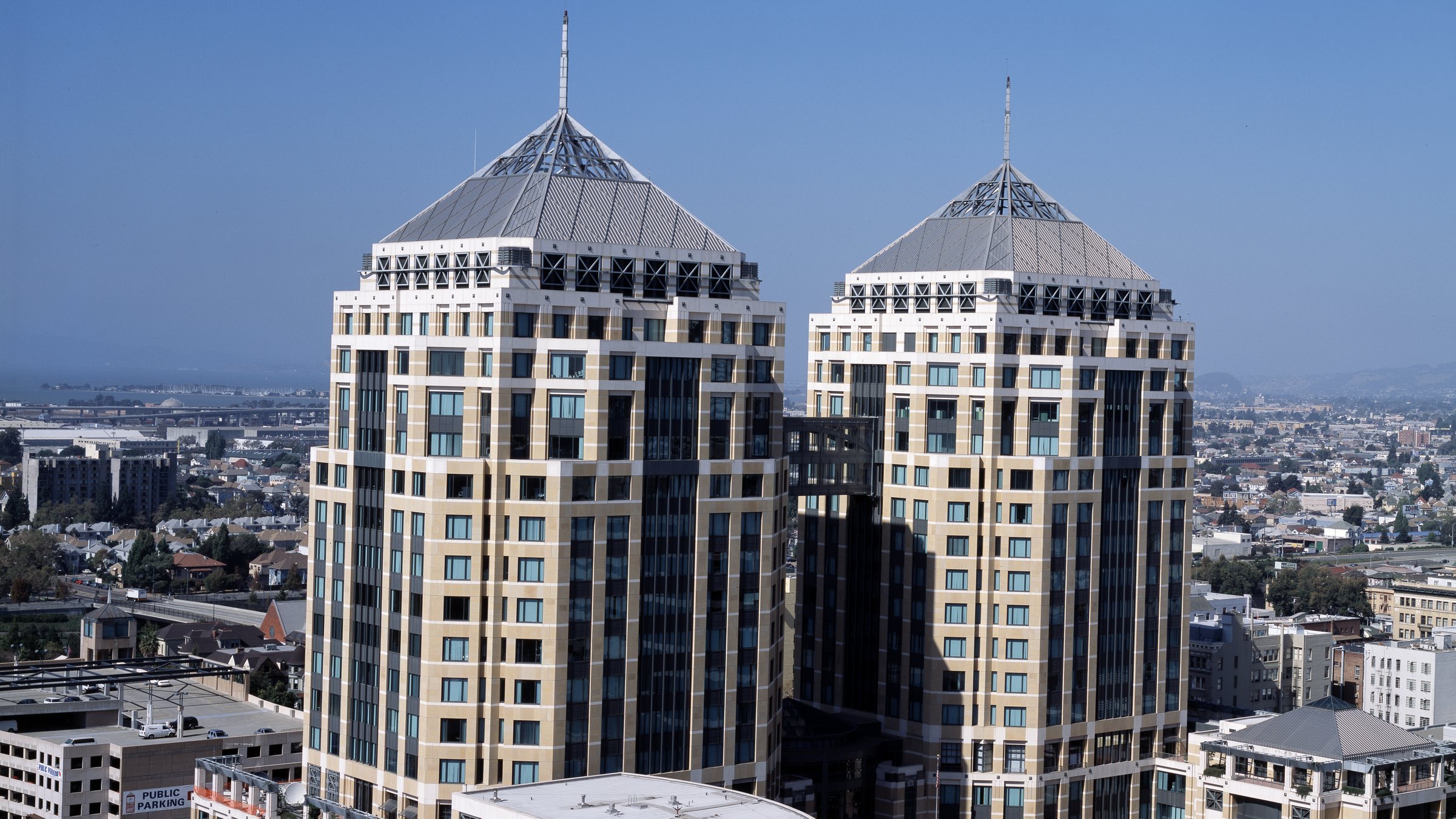
A second US federal judge has blocked the $100,000 H-1B fee, the payment President Trump put on new petitions for the US work visa for skilled jobs. On 30 September 2026, Judge Haywood Gilliam Jr. in Oakland, California cancelled the rules that USCIS, the US immigration agency, and the State Department use to collect it, and barred the agencies from enforcing it, including under the one-year extension signed on 18 September, until they put it through public consultation.
Nothing changes for employers today, because the fee has not been collected since 24 July, when an appeals court left a Boston ruling against the same rules in force. What the Oakland order adds is a second, separate block, so a government win in the Boston appeal no longer brings the fee back on its own. For Indian F-1 students on OPT, the work permission that follows a US degree, the $100,000 never applied to a switch to H-1B that USCIS grants inside the US. The charge that does reach them is a separate proposed fee of $103,265, and this ruling leaves it untouched.
What did the Oakland court order on the $100,000 H-1B fee?
The 35-page order in Global Nurse Force v. Trump, case 4:25-cv-08454 in the federal court for the Northern District of California, grants a preliminary injunction in part. A preliminary injunction is a court order that holds things in place while a lawsuit is still being decided. This one does four things.
- It vacates, which means cancels, what the judge calls the “Agency Policies”. These are the USCIS and Customs and Border Protection memos of 20 September 2025, the USCIS and State Department FAQs of 21 September 2025, and the USCIS update of 20 October 2025 that told employers to pay through the Pay.gov website and set the test for exceptions.
- It bars the agencies from enforcing those rules under the original 2025 proclamation and under Proclamation 11069, the 2026 extension that runs to 21 September 2027.
- It doesn’t rule on the proclamation itself. The judge dealt with the agency rules first and refused the rest of the request “at this time”, so the question of whether the President had the power to set the fee is still open.
- It refuses the government’s request that the plaintiffs post a bond, which is money held to cover the government’s losses if the order later proves wrong, and refuses to pause the order while the government appeals.
Agency Defendants, and all persons acting under their direction, are enjoined from enforcing or implementing the Agency Policies made pursuant to or in implementation of Proclamation No. 10973 and its extension in Proclamation No. 11069, until notice-and-comment rulemaking under the APA and regulatory flexibility analyses under the RFA have been conducted.
US District Court, Northern District of California, order of 30 September 2026
Notice-and-comment rulemaking is the process in which an agency publishes a draft rule, takes public comments and answers them before the rule binds anyone. The judge found two problems with skipping it. The agencies never weighed alternatives or the employers who had planned around the old fees, which makes the rules arbitrary under US administrative law. And the rules decided who pays, how and who is excused, which is lawmaking that needs public consultation. For scale, the judge put the usual government fees on an H-1B petition at $7,595 at most.
The relief is not limited to the five organisations that asked for it. The judge cancelled the rules themselves, and turned down a request to run the case on behalf of all affected employers only because it was not needed. The plaintiffs include a nurse recruiter, a kidney practice in rural North Carolina, a school on a Sioux reservation in South Dakota, three Colorado charter schools and BAE Industries, a car parts maker near Detroit. Two of the cases involve Indian workers. BAE’s quality engineer went back to India when his H-1B ran out before an extension was filed, and the kidney practice’s only qualified candidate for an open post was an Indian doctor who returned home after her US fellowship, with her petition still pending.
Was anyone paying the $100,000 H-1B fee before 30 September?
No employer has had to pay it since 24 July 2026. A Boston federal court cancelled the same agency rules on 8 June in a case brought by 20 states, and on 24 July the appeals court in Boston refused to pause that ruling. USCIS says it is complying while it decides its next steps.
Before that, the payment was real. The 2026 proclamation itself says the $100,000 “has been made for over 700 petitions”, and a USCIS technical appendix to its fee proposal counts new consular H-1B petitions filed between 21 September and 24 May falling from 13,823 a year earlier to 1,212, a drop of 91%. The table lists each step that decided whether the money was being collected.
| Date | What happened | Was the $100,000 being collected? |
|---|---|---|
| 19 September 2025 | President Trump signs Proclamation 10973 | Not yet |
| 21 September 2025 | Proclamation 10973 takes effect for new H-1B petitions | Yes, for workers outside the US |
| 20 October 2025 | USCIS sets payment through Pay.gov and a test for exceptions | Yes |
| 2025 | A Washington DC court upholds the fee in a case by the US Chamber of Commerce, the largest US business group, which appeals | Yes |
| 8 June 2026 | A Boston court cancels the agency rules in California v. Mullin, and the order is put on hold while the government asks for a pause | Yes, while the hold lasted |
| 11 June 2026 | The government appeals the Boston ruling | Yes, while the hold lasted |
| 24 July 2026 | The appeals court in Boston refuses the pause | No |
| 18 September 2026 | Proclamation 11069 extends the fee to 21 September 2027 | No |
| 30 September 2026 | The Oakland court cancels the rules again, extension included | No |
The Chamber of Commerce appeal is still waiting for a decision in Washington. On 25 September its lawyers told that court the new proclamation is “identical in relevant respects” to the old one.
Why does a second ruling matter if the $100,000 H-1B fee was already blocked?
It matters because the first block could fall. The government is appealing the Boston ruling and has said that if it wins, it will collect the $100,000, including on petitions already filed. With the Oakland order in place, a win in Boston no longer restarts collection, because a second court has cancelled the same rules.
The government has been plain about its plans. USCIS is part of the Department of Homeland Security, or DHS, and its page on H-1B workers still carries this line.
If this order is later lifted, DHS still plans to collect the payment.
USCIS, H-1B Specialty Occupations, last updated 21 September 2026
The plaintiffs told the Oakland court on 24 September that a USCIS official had stated under oath in the Boston case that the agency would “issue a Request for Evidence or Notice of Intent to Deny requesting evidence the payment was made” on pending petitions, and would try to revoke approvals. In plain terms, employers with pending petitions would be asked to prove they had paid. We read that statement as quoted in the plaintiffs’ filing, not in the original.
The order has limits. It lasts only until the agencies hold the public consultation it asks for, so a properly made rule could bring the $100,000 back. It also says nothing on presidential power, which the Washington court decided in the government’s favour. The judge wrote that the Supreme Court “is likely to eventually provide further clarity”.
Does the $100,000 H-1B fee apply to Indian students already in the US?
Mostly not, but calling them unaffected goes too far. Under the USCIS rules now cancelled, the fee did not apply when an employer asked USCIS to change a student from F-1 to H-1B status inside the US and USCIS granted it. It did apply when that change was refused, or when the student left the US before USCIS decided.
A change of status is the route most Indian graduates on OPT take, whether they finished an MS or a US MBA. OPT is the work permission that follows an F-1 degree, and the employer asks USCIS to switch the graduate to H-1B without a trip home for a visa stamp. Both the USCIS page and the 2026 proclamation draw the line at whether the worker has to enter the US to use the approval.
This restriction applies to aliens who must seek admission to the United States to effectuate the approval of a petition described in section 1 of this proclamation, including through consular notification, notification at a port of entry, pre-flight inspection, or pre-clearance.
Proclamation 11069, section 3(a), 18 September 2026
| Your situation | Under the USCIS rules before the courts | Today |
|---|---|---|
| On F-1 or OPT, employer files a change of status, USCIS grants it | No payment | No payment |
| On F-1 or OPT, but the petition asks for a visa stamp abroad, called consular notification | $100,000 due | Not collected while the court orders stand |
| Change of status refused, for example because your F-1 or OPT status had lapsed | $100,000 due | Not collected while the court orders stand |
| You leave the US before USCIS decides your change of status | $100,000 due | Not collected while the court orders stand |
| Back in India after your degree, employer files for you from abroad | $100,000 due | Not collected while the court orders stand |
Based on the USCIS H-1B Specialty Occupations page, last updated 21 September 2026, and Proclamation 11069. The amounts apply to new H-1B petitions filed on or after 21 September 2025.
Indians are the largest group this fee touches, and that isn’t limited to IT workers. In the year to September 2025, about 70% of approved H-1B petitions were for people born in India, and 50.3% of the approvals for first-time employment, according to the USCIS report to Congress for 2025.
Does the Oakland ruling stop the proposed $103,265 H-1B fee?
No. The $103,265 fee is a separate proposal from the Department of Homeland Security, published on 25 August 2026 under a different law, and the Oakland order mentions it only as background. It’s still a draft with no start date, but unlike the $100,000 it would apply to students who switch from F-1 to H-1B inside the US.
The proposed rule charges the fee on “all H-1B cap-subject petitions”. Cap-subject petitions are the ones that need a place in the yearly H-1B lottery, which is how most first H-1B jobs with private companies start. The proposal exempts cap-exempt employers, such as universities and their affiliated nonprofits, and extensions for workers already counted in the cap. It draws no line between workers inside and outside the US.
Public comments closed on 24 September 2026, so DHS now has to answer them before it can finalise anything. DHS has said that an employer covered by both charges would pay both. DHS bases the $103,265 on its own fee powers under immigration law, not on the President’s power over entry. Reuters, reporting the Oakland ruling, noted that a final fee would likely be challenged in court, on different legal issues from the cases over the $100,000.
Our view: what should Indian students and H-1B applicants do now?
In our reading, an Indian student on F-1 or OPT should plan around the proposed $103,265 fee rather than the $100,000. The $100,000 was never written for a change of status granted inside the US, and two courts now block it. The proposal has no start date, but it was written to cover exactly that route.
What we would do depends on where you stand.
Studying or on OPT in the US. We would keep F-1 or OPT status unbroken until any H-1B change of status is decided, and avoid travelling abroad while it is pending, because those two slips were what triggered the $100,000 under the old rules. A STEM OPT extension gives up to three lottery tries, which matters more now that a large fee may sit behind each try.
Choosing a first job after a US master’s. A cap-exempt employer, such as a university or a nonprofit research body linked to one, would not pay the proposed $103,265. For students whose MS in the USA leads naturally to research roles, that is worth weighing.
In India with a US job offer. Employers can file without the payment today. Reaching back to those petitions later would now need the government to overturn both the Boston and Oakland rulings, which is a much higher bar than winning one appeal.
Next on the calendar, the Oakland parties file a joint plan by 20 October and meet the judge on 27 October. The states’ brief in the Boston appeal is due on 4 November. We expect the government to appeal the Oakland order and ask for a pause, as it did in Boston.
Several things are still unknown on 1 October 2026.
- Whether the government appeals the Oakland order, and whether the appeals court pauses it.
- Whether DHS runs a public rulemaking on the $100,000 itself, which the Oakland order allows.
- Whether employers who paid on more than 700 petitions get their money back. Neither ruling orders a refund.
- When the Washington appeals court decides the Chamber of Commerce case on the President’s power.
- When, and in what form, DHS finalises the $103,265 fee. The proposal gives no date.
Families weighing the cost of a US degree and the education loan behind it against the job that follows can leave the $100,000 out of their sums for now and keep an eye on the $103,265.
- On 30 September 2026, Judge Haywood Gilliam Jr. in Oakland cancelled the USCIS and State Department rules that collect the $100,000 H-1B fee and barred their use under the extension that runs to September 2027, until a public rulemaking is held.
- The fee has not been collected since 24 July 2026 because of a Boston ruling, so the Oakland order is a second, independent block rather than a new reprieve.
- The order does not decide whether the President could set the fee, and a Washington DC court upheld it in 2025; that appeal is pending.
- The $100,000 did not apply to an F-1 or OPT holder whose change to H-1B status inside the US was granted.
- The separate proposed $103,265 fee would apply to every cap-subject H-1B petition, including changes of status from F-1, and this ruling does not affect it.
Frequently asked questions
Is the $100,000 H-1B fee cancelled for good?
No. Two courts have cancelled the agency rules that collect it, but neither has struck down the proclamation itself, and a Washington DC court upheld the fee in 2025. The government is appealing, and the Oakland order lasts only until the agencies make the rule through public consultation. For now, nobody has to pay it.
Do I have to pay the $100,000 H-1B fee if I am on OPT in the US?
No, and you never did if USCIS granted your change of status from F-1 to H-1B inside the US. Under the old USCIS rules, the fee applied only if that change was refused, if you left before a decision, or if the petition asked for a visa stamp abroad. H-1B petition fees are charged to the employer, not to you.
How much is the $100,000 H-1B fee in Indian rupees?
It comes to about ₹96 lakh, at ₹95.83 to the US dollar, worked out from the European Central Bank’s euro reference rates for 30 September 2026. The proposed $103,265 fee is about ₹99 lakh. The usual government fees on an H-1B petition, which the Oakland judge put at $7,595 at most, come to about ₹7.3 lakh.
Will the US government appeal the Oakland H-1B fee ruling?
We expect it to, though the White House gave Reuters no comment. The government appealed the Boston ruling within three days and asked for a pause there, and the Oakland judge has already refused a pause. An appeal would go to the Ninth Circuit court of appeals. The Oakland parties next meet the judge on 27 October 2026.
Does the extension of the H-1B proclamation to 2027 bring the fee back?
No. President Trump extended the proclamation on 18 September 2026 to 21 September 2027, but the extension did not undo the Boston ruling, and the Oakland order now names the extension directly. USCIS still says it is complying with the court order. The fee could return only through a court reversal or a new rule.
Sources
All sources read on 1 October 2026.
- US District Court, Northern District of California, Global Nurse Force v. Trump, No. 4:25-cv-08454-HSG, order granting in part the motion for a preliminary injunction, 30 September 2026 (docket on CourtListener)
- Plaintiffs’ notice of recent factual developments, Global Nurse Force v. Trump, 24 September 2026
- Proclamation 11069, Restriction on Entry of Certain Nonimmigrant Workers, 91 FR 60497, signed 18 September 2026 and Proclamation 10973, 90 FR 46027, 19 September 2025
- USCIS, H-1B Specialty Occupations, last reviewed 21 September 2026
- US District Court, District of Massachusetts, California v. Mullin, No. 1:25-cv-13829, judgment of 8 June 2026 and US Court of Appeals for the First Circuit, No. 26-1699, order of 24 July 2026
- US Court of Appeals for the DC Circuit, Chamber of Commerce v. DHS, No. 25-5473, letter of 25 September 2026
- DHS, Fee for Certain H-1B Petitions, proposed rule, 91 FR 54817, 25 August 2026 and its technical appendix
- USCIS, Characteristics of H-1B Specialty Occupation Workers, Fiscal Year 2025, 24 April 2026
- European Central Bank, euro foreign exchange reference rates, 30 September 2026 (USD 1.1355 and INR 108.8205 to the euro)
- US District Court, Northern District of California, Oakland courthouse
- Reuters, “Second judge blocks Trump’s $100,000 fee for new H-1B worker visas”, 30 September 2026
