

South Korea’s Ministry of Justice plans to make the E-7-4 skilled worker visa easier to reach and keep for migrant workers who stay long with one employer. Its 22 October 2026 release promises fewer papers for a stay extension, an online points calculator, more points for long service and a shorter wait before F-2 residence, but gives no start date. The route starts only from E-9, E-10 or H-2 work inside Korea, and E-9 workers come from 17 partner countries that don’t include India. For an Indian weighing work in Korea, the routes Indians actually use, a Korean degree or a professional job offer, are untouched.
Korea’s own figures show how few Indians take this route. At the end of September 2026, 66 Indians were in the skilled-worker group of Korea’s E-7 visa, the jobs reached through E-7-4, against 1,020 in its professional jobs and 2,277 on D-2 degree-study visas.
What did South Korea’s Justice Ministry announce for E-7-4 workers on 22 October 2026?
The Ministry of Justice set out five planned changes to the E-7-4 visa in a press release on 22 October 2026. The E-7-4 visa is a long-stay work status for migrant workers who first came to Korea for non-professional jobs and later prove their Korean, their income and their years of work. The yearly quota rose from 2,000 to 35,000 in September 2023 and is 33,000 for 2026, under a June 2026 release. In September 2026, 52,648 people held the visa.
| Planned change | What the release says | Start date given |
|---|---|---|
| Fewer papers for a stay extension | From 12 or more documents to 7 or fewer | None |
| An online employment visa guide | A pilot on HiKorea, the immigration website, with an occupation search, eligibility check, points calculator and document checklists | None, and the exact access path, on HiKorea or another site, is “to be confirmed later” |
| More points for long service | Bonus points on the switch to E-7-4 grow with years at the same workplace | None |
| An easier move to F-2 residence | The stay needed before switching from E-7-4 to F-2 will be eased | None |
| A ministry notice on the full route | A notice setting out the steps from E-9 or E-10 to E-7-4, then F-2, then F-5 permanent residence | None |
The ministry sets out both long-service changes in one sentence.
외국인 근로자가 동일업체에서 오래 일할 경우 숙련기능인력(E-7-4) 전환 시 근속기간에 따라 장기근속 가점을 확대하고, 추후 거주(F-2) 자격 전환에 필요한 체류기간을 완화하는 인센티브를 제공하여 근로자의 장기근속 유인을 강화한다.
Ministry of Justice, Korea, press release on the E-7-4 system, 22 October 2026
In our translation, a worker who stays long at one company will earn more long-service points on switching to E-7-4, rising with the years served, and will need a shorter stay before moving on to F-2. The release doesn’t give a figure for either, or say which documents will remain, and it says the guide’s answers have no legal force.
How does a migrant worker in Korea move from E-9 to E-7-4 today?
Today a worker can switch only from inside Korea, with several years of E-9, E-10 or H-2 work, the current employer’s backing, a contract of two years or more and a points score. The detailed conditions date from September 2023, and the ministry’s 1 June 2026 release restates them with later changes. These are what the new plans adjust.
Under the September 2023 rules, as restated in June 2026, a worker needs four things. The first is at least four years in Korea on E-9, E-10 or H-2 within the last ten years, with normal work for the current employer, or three years for a worker outside the Seoul capital area whom a provincial or metropolitan government recommends. The second is a recommendation from the current employer, after at least one year with it. Since June 2026, time at a previous employer counts towards that year if the worker had to move because the business closed or because of abuse such as assault or unpaid wages.
The third is a contract with the same employer for at least two more years at 26 million won a year or more, or 25.89 million won in farming, livestock, fishing and coastal shipping under the immigration service’s October 2026 stay manual. The fourth is 200 points out of 300, bonus points included, with at least 50 each for income and for Korean. Until 31 December 2026, a worker who scores at least 150 on everything except Korean can switch first and must reach the Korean level by the first two-year extension. Under the stay manual, a worker who misses it can’t invite family and gets only six more months, after which the permit is cancelled if Korean is still short.
The lowest band that earns the 50 Korean points is TOPIK level 2, stage 2 of the government’s social integration programme, or 41 to 60 on that programme’s placement test. In the points table, unchanged on this item between 2023 and June 2026, three years or more at the current workplace earns 20 bonus points, and the ministry says the table can change. The 2023 release added that after switching, a worker had to stay with the same employer for two years, and could later move to F-2 or F-5 after five or more years and meeting income and other conditions. Under the stay manual, a worker who used the three-year regional route must stay with that employer and live in that region for three years.
Korean is where workers struggle most. In the June 2026 survey of 316 workers and 470 employers, 53.5% of workers named getting the Korean score as their biggest difficulty, while 30.1% of employers named the paperwork. Interest is high on both sides, with 81.3% of workers and 85.3% of employers wanting the switch.
The same survey shows what the inside-Korea limit costs. Workers who have already gone home can’t return on E-7-4, even though 90.6% of employers said they would invite a departed worker back.
Can Indians apply for South Korea’s E-7-4 visa?
Almost never, because the E-7-4 route begins with years on E-9, E-10 or H-2, and India doesn’t send E-9 workers. Korea recruits E-9 workers only from countries that have signed a labour-sending agreement with it, and only people on those countries’ job-seeker rosters. In 2026 there are 17 such countries, and India is not one of them.
The 17, as listed on Korea’s official indicator portal, are the Philippines, Thailand, Indonesia, Sri Lanka, Vietnam, Mongolia, Uzbekistan, Cambodia, Pakistan, China, Bangladesh, Kyrgyzstan, Nepal, Myanmar, Timor-Leste, Laos and Tajikistan. H-2, the third starting visa, is a work visa for ethnic Koreans who hold another nationality, and E-10 covers crew on Korean ships.
The figures below count Indian nationals in Korea on five visas, with E-7 split in two, at the end of September 2026, from the Ministry of Justice’s monthly immigration statistics.
| Visa | What it is for | Indian nationals (people) |
|---|---|---|
| D-2 | Degree study | 2,277 |
| D-10 | Looking for a job | 239 |
| E-7, professional jobs | Skilled professional work with a Korean employer | 1,020 |
| E-7, skilled-worker group | Jobs reached through E-7-4, from E-9, E-10 or H-2 | 66 |
| E-9 | Non-professional work through the partner-country system | 9 |
| E-10 | Crew on Korean ships | None listed |
Figures at 30 September 2026. The E-7 rows come from the monthly report’s E-7 table, the rest from its nationality and visa table. The E-7 table counts 52,976 people in the skilled-worker group, 328 more than the release’s 52,648 E-7-4 holders, and neither document explains the gap.
The 9 Indians on E-9 are among 349,660 E-9 workers in Korea, and the statistics don’t say how they came to hold it.
Our view: what does the E-7-4 reform mean for an Indian weighing work in Korea?
In our view, the reform helps migrant workers already in Korea and changes almost nothing for someone in India. It plans to cut paperwork and reward loyalty to one employer but creates no new way into Korea, and the acting minister, Lee Jin-soo, said it is not meant to bring in more foreign workers.
이번 제도 개선은 외국인력의 유입 규모를 확대하는 것이 아니라, 이미 우리 산업 현장에서 장기간 성실히 일해 온 외국인 근로자가 안정적으로 일하며 지역 사회에 정착할 수 있도록 지원하는 것
Lee Jin-soo, acting Minister of Justice, Korea, 22 October 2026
Translated by us, he says the change “is not about increasing the number of foreign workers coming in”, but about helping workers who have long worked hard in Korean industry to keep working steadily and settle in their local communities.
| Your situation | What the 22 October plans mean for you |
|---|---|
| Indian student planning or finishing a master’s or PhD in Korea | Unaffected. A graduate on D-10 can apply for professional E-7 jobs, where most Indians on E-7 work, and the reform does not touch them. |
| Indian in India with a professional job offer from a Korean employer | Unaffected. Professional E-7 jobs keep their own salary and qualification rules. |
| Indian offered an E-9 factory or farm job in Korea by an agent in India | In our view, not an official E-9 route, because E-9 workers come only from the 17 partner countries’ job-seeker rosters. |
| Indian hoping to reach Korean permanent residence through E-7-4 | Not open. E-7-4 needs years on E-9, E-10 or H-2 first. |
- On 22 October 2026, South Korea’s Ministry of Justice said it plans to cut E-7-4 extension papers from 12 or more to 7 or fewer, pilot an online points calculator, add long-service points and ease the move to F-2, with no start date.
- E-7-4 is reached only from inside Korea, after four years on E-9, E-10 or H-2, or three outside the Seoul capital area with a regional government’s recommendation, and with 200 of 300 points.
- India isn’t among the 17 countries that send E-9 workers to Korea, and only 66 of 52,976 people in E-7’s skilled-worker group were Indian on 30 September 2026.
- The routes Indians use, a Korean degree then D-10 job seeking, or a professional E-7 job, are not changed.
Frequently asked questions
What is the E-7-4 visa in South Korea?
E-7-4 is South Korea’s skilled worker visa for migrant workers who first came for non-professional jobs. A worker with four of the last ten years on E-9, E-10 or H-2, or three outside the Seoul capital area with a regional recommendation, plus an employer’s backing and 200 of 300 points, can switch inside Korea.
When will South Korea’s October 2026 E-7-4 changes start?
The Ministry of Justice has not said. Its 22 October 2026 release describes all five changes as plans, including the cut to 7 or fewer documents and the HiKorea guide, whose exact access path it says will be confirmed later. It gives no date for the extra long-service points or the shorter stay before F-2 either.
Can an Indian on a D-10 job-seeking visa switch to E-7-4?
No. E-7-4 needs at least four of the last ten years on E-9, E-10 or H-2, or three outside the Seoul capital area with a regional government’s recommendation, so time on D-10 or a student visa doesn’t count. An Indian graduate on D-10 can instead apply for other E-7 jobs, with their own salary floors and occupation lists.
Sources
All sources read on 23 October 2026. Korean quotations are given in the original, with our own translations.
- Ministry of Justice, Korea, press release, “오래 일하면서 정주까지 이어지는 제도로” 법무부, 숙련기능인력(E-7-4) 제도 개선 추진, 22 October 2026, with its PDF attachment
- Ministry of Justice, Korea, press release, 숙련기능인력 3만 5천 명 혁신적 확대 방안(K-point E74), 25 September 2023, with its PDF attachment
- Ministry of Justice, Korea, press release, 농어촌 외국인 숙련인력 고용 한도 50%로 확대…외국인 노동자 ‘부당 이직’ 시 이전 경력도 인정, 1 June 2026, with its PDF attachment
- HiKorea, Korea Immigration Service, 체류민원 자격별 안내 매뉴얼, the stay manual by visa type, October 2026 edition, 숙련기능인력(E-7-4) 체류관리 안내 매뉴얼 section
- e-나라지표, Korea’s official indicator portal, employment permit system indicator, partner countries as of 2026
- Ministry of Justice, Korea Immigration Service, monthly immigration statistics for September 2026, nationality and visa table and monthly report, posted 21 October 2026
- The Korea Herald, Korea to ease E-7-4 visa path for long-serving migrant workers, 22 October 2026
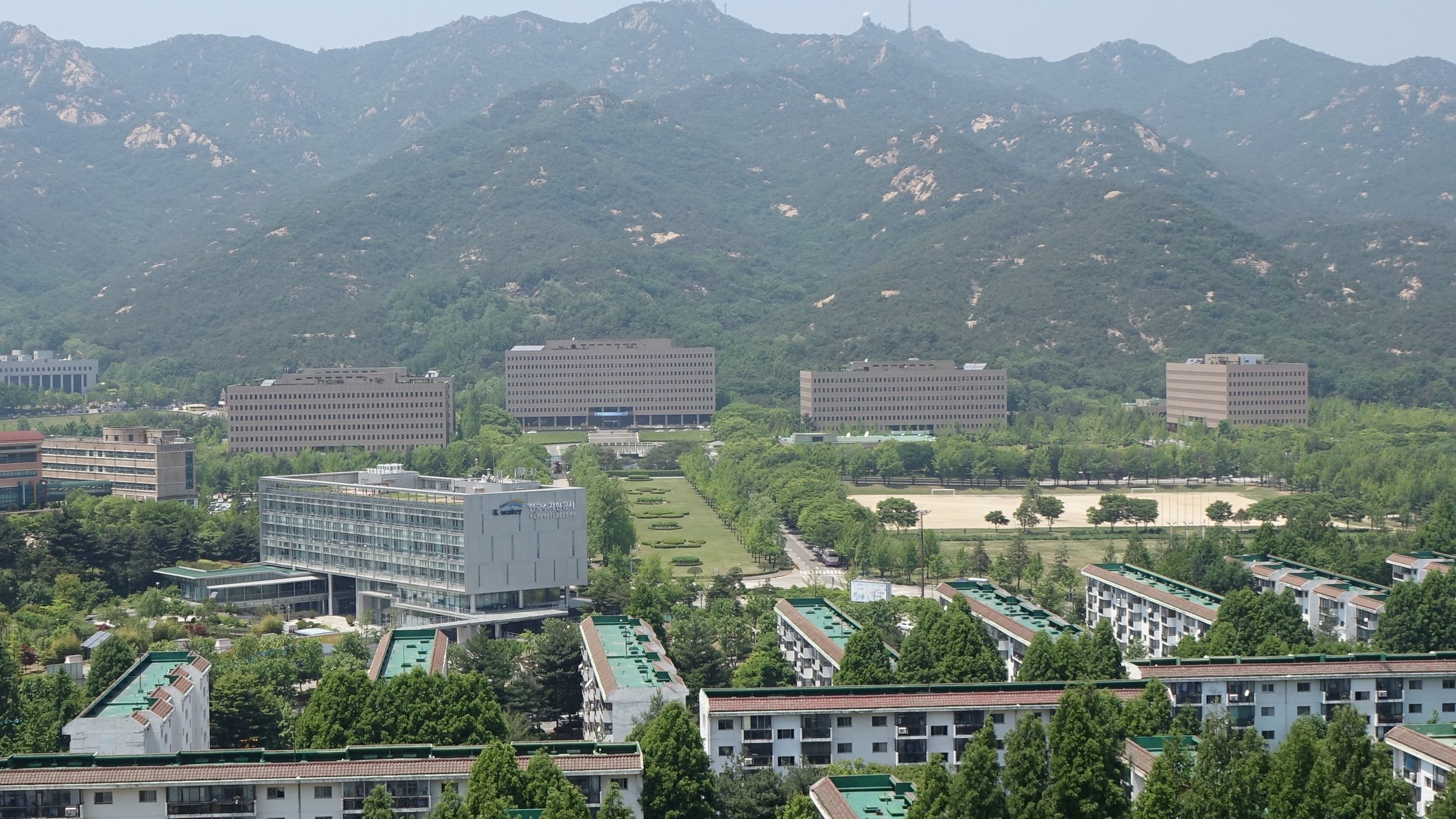
- Wikimedia Commons, Government Complex Gwacheon, Kwangmo, 25 May 2015
